Condition Focus
Robotic Hip Replacement
Robotic-arm assisted total hip arthroplasty for end-stage hip arthritis — patient-specific planning, precise implant positioning, and a rapid, protocol-driven recovery.
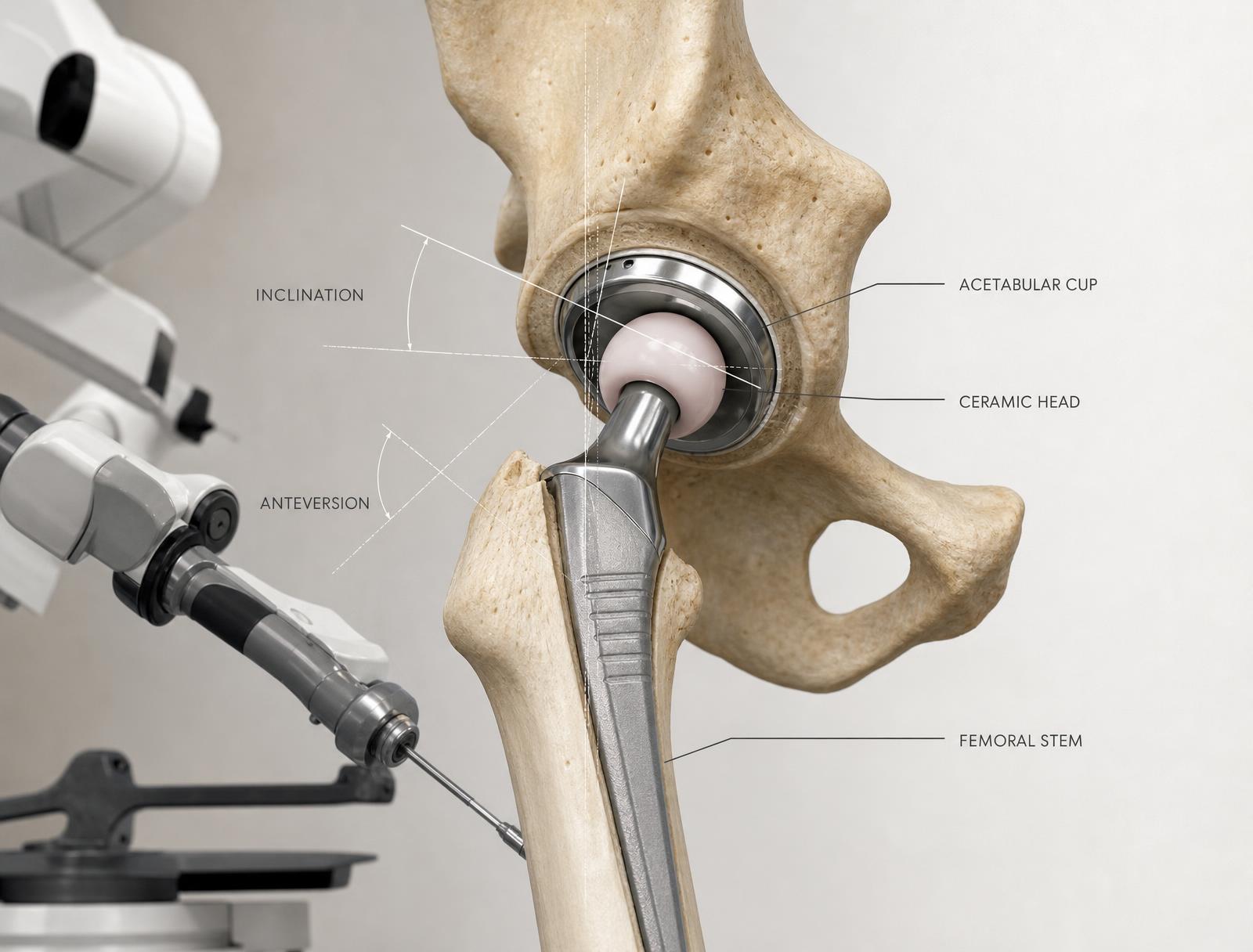
When the joint surface is no longer preservable, hip replacement reliably restores pain-free function. Robotic-arm assistance builds a patient-specific 3D plan from a preoperative CT scan and executes it with sub-millimeter accuracy, controlling cup position, leg length, and offset within a defined safe zone.
Accurate positioning matters most in exactly the population a hip preservation practice sees: younger, higher-demand patients who will place decades of load on the implant and who expect to return to sport.
Symptoms & findings
- /Groin and thigh pain with every step, present at rest or at night
- /Progressive stiffness — difficulty with socks, shoes, and getting in and out of a car
- /Radiographs showing bone-on-bone joint space loss
- /Diminishing benefit from injections, therapy, and anti-inflammatories
- /Walking distance and daily function limited by the hip
Diagnostic approach
Standing radiographs confirm end-stage arthritis and define femoral offset, leg length, and bone quality. When preservation options have been excluded, a preoperative CT builds the 3D model used for robotic planning, allowing implant size and position to be chosen before the incision is made.
Treatment options
Robotic-arm assisted total hip arthroplasty
The preoperative 3D plan defines cup inclination, anteversion, depth, and stem position. Intraoperatively the robotic arm constrains reaming and cup impaction to the plan, and leg length and offset are verified in real time against the model.
Anterior and soft-tissue sparing approaches
Where anatomy permits, an intermuscular approach avoids detaching the abductors, which supports faster early mobility and a lower dislocation risk profile.
Hip replacement in young and active patients
Bearing surface selection, precise offset restoration, and a return-to-activity plan built around durability — with the goal of resuming cycling, golf, hiking, and appropriate recreational sport.
Why patients see Dr. Almasri in Cincinnati
- /Dual fellowship training in hip preservation surgery and orthopedic sports medicine
- /Practice strongly focused on the young and active hip
- /Team physician experience with FC Cincinnati and regional collegiate programs
- /Peer-reviewed research and international faculty roles in hip preservation
- /In-office and direct online scheduling through Mercy Health