Condition Focus
Muscle & Tendon Repair
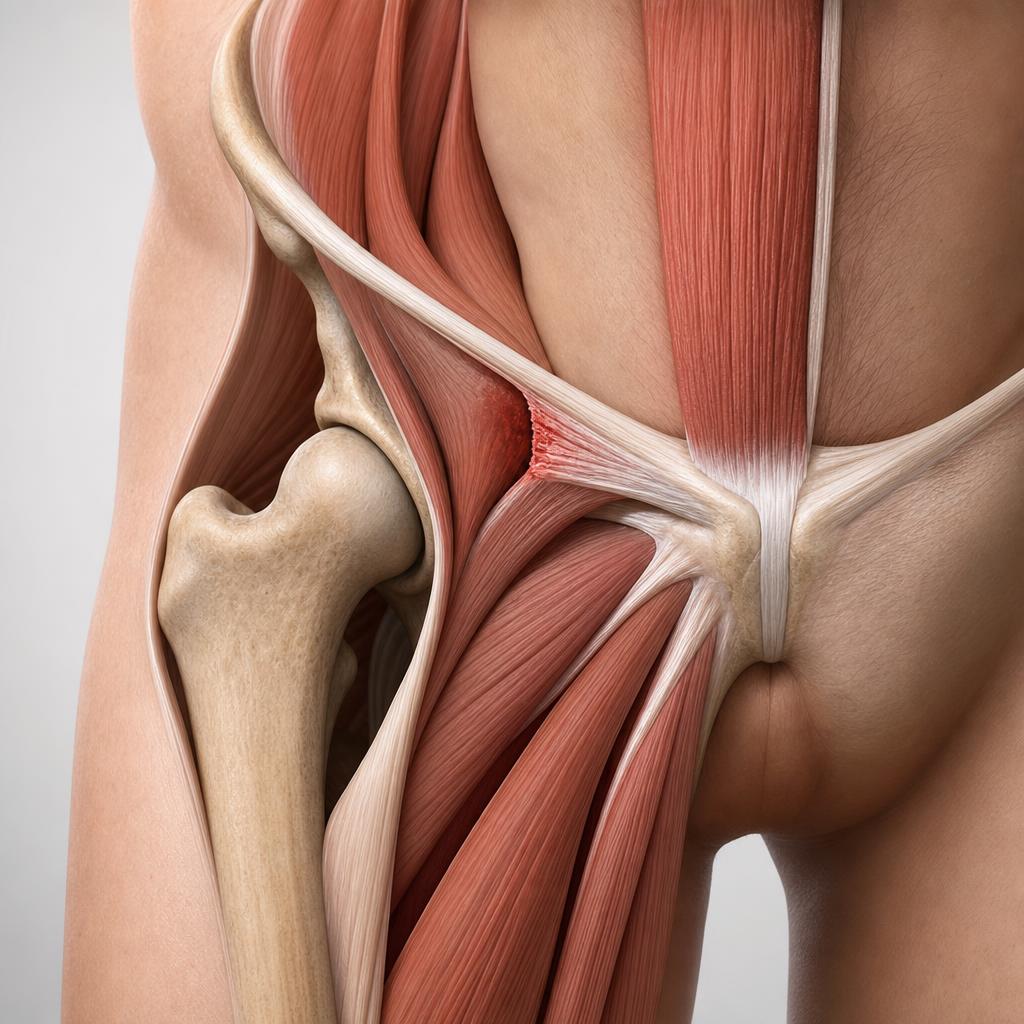
Repair of the tendons and core musculature that drive and stabilize the hip — abductors, hamstring origin, hip flexors, and the core muscle complex.
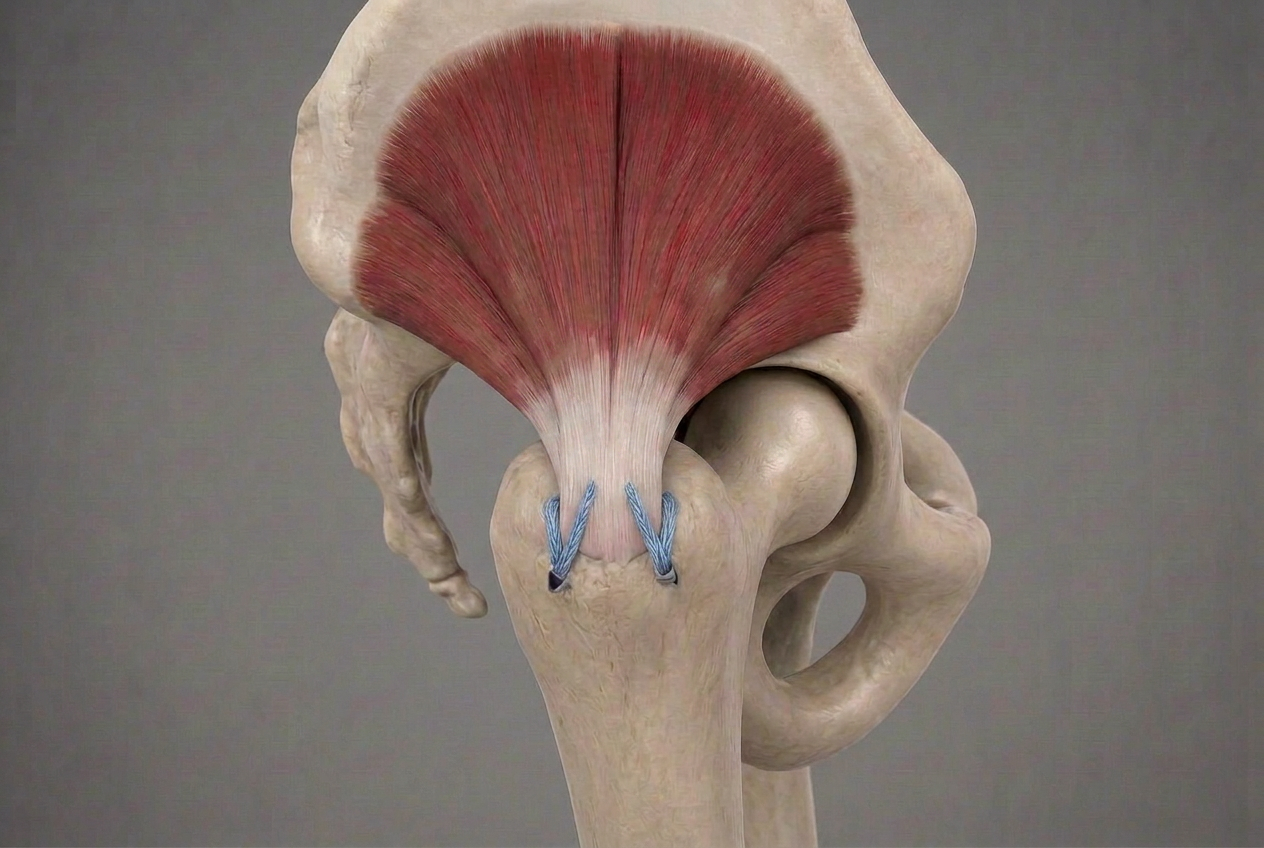
Tendon and muscle injuries around the pelvis are frequently mistaken for intra-articular hip pain, and patients often arrive after months of treatment aimed at the wrong structure. Gluteal tendon tears are commonly labeled 'bursitis'; a proximal hamstring avulsion is commonly labeled a 'pulled hamstring'.
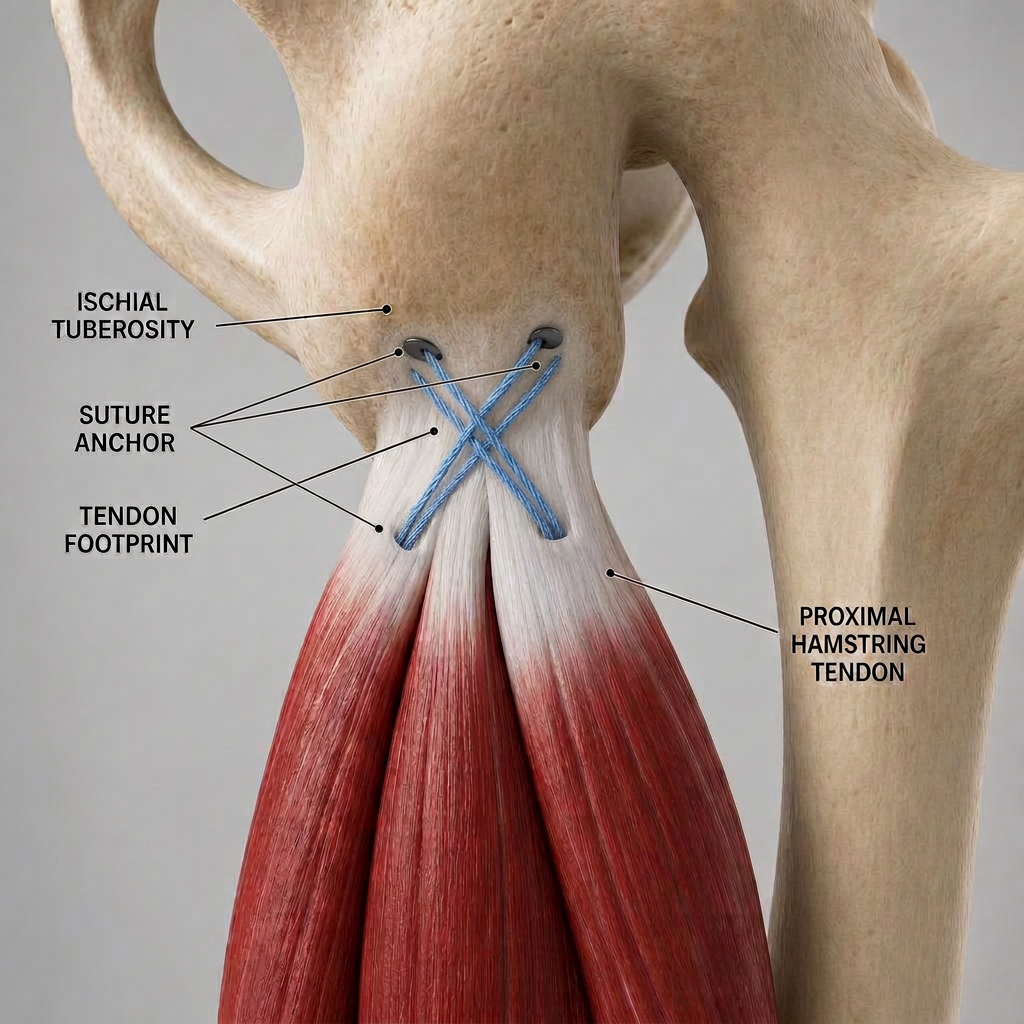
Repair restores the force-transmitting tissues to their anatomic footprints — the abductors to the three facets of the greater trochanter, the hamstring origin to the ischial tuberosity — with a rehabilitation plan matched to the tissue healing timeline.
Symptoms & findings
- /Lateral hip pain and tenderness over the greater trochanter, worse lying on that side
- /Weakness or a limp with a Trendelenburg pattern when walking
- /Deep buttock pain when sitting, driving, or accelerating — typical of hamstring origin injury
- /A sudden pop with sprinting, water skiing, or a forced hip flexion injury
- /Groin or lower abdominal pain with cutting and kicking, suggesting core muscle injury
Diagnostic approach
Examination localizes tenderness and tests abductor and hamstring strength in the positions that isolate each tendon. MRI defines whether a tendon is tendinopathic, partially torn, or fully retracted, and quantifies retraction and muscle atrophy — both of which drive the decision between rehabilitation and repair, and between endoscopic and open technique.
Treatment options
Gluteal (abductor) tendon repair
Endoscopic or open repair reattaches the gluteus medius and minimus to their facets on the greater trochanter, typically with a double-row anchor construct that restores the tendon footprint and abductor lever arm.
Proximal hamstring repair
Acute avulsions are reattached to the ischial tuberosity with suture anchors, ideally within the first weeks. Chronic retracted tears are still repairable, sometimes requiring sciatic neurolysis or graft augmentation.
Rectus femoris and hip flexor repair
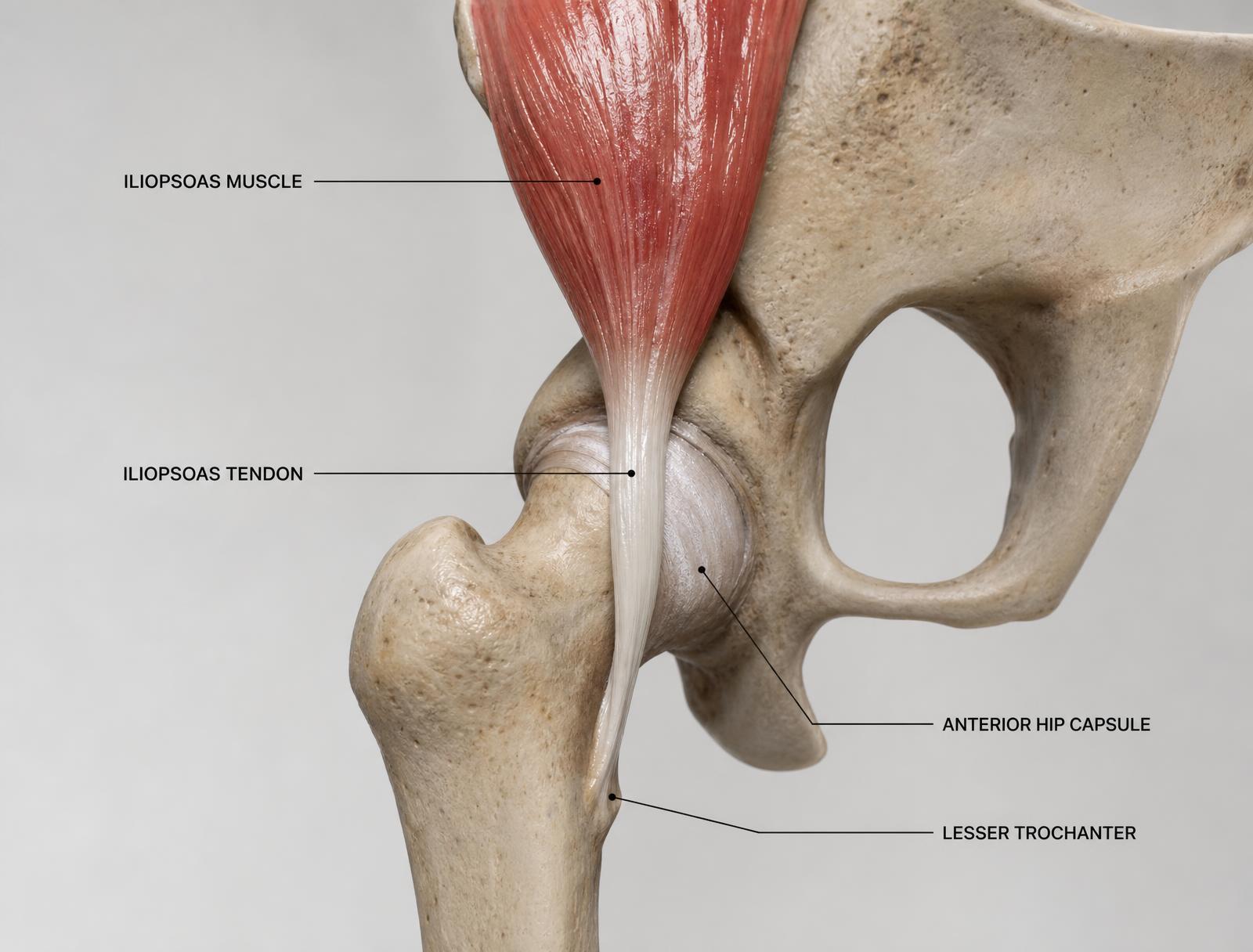
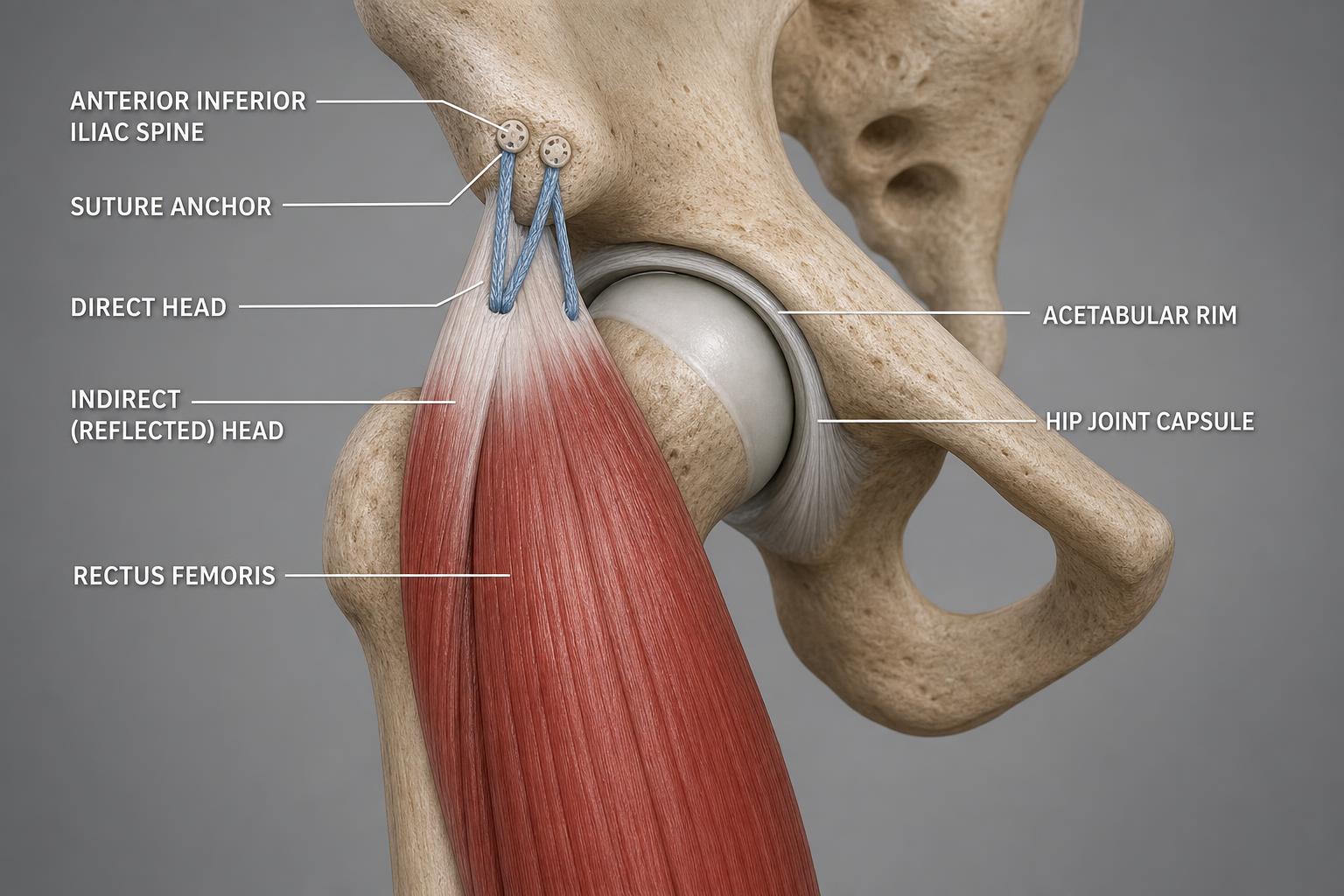
Repair or reattachment of the direct and indirect heads of the rectus femoris and of the iliopsoas in kicking and sprinting athletes with persistent, function-limiting injury.
Core muscle injury / sports hernia
Evaluation and screening for pubic-related groin pain, with coordinated care to distinguish adductor, rectus abdominis, and intra-articular sources before treatment is chosen.
Why patients see Dr. Almasri in Cincinnati
- /Dual fellowship training in hip preservation surgery and orthopedic sports medicine
- /Practice strongly focused on the young and active hip
- /Team physician experience with FC Cincinnati and regional collegiate programs
- /Peer-reviewed research and international faculty roles in hip preservation
- /In-office and direct online scheduling through Mercy Health