September 30, 2026
Hip Labral Tears: Repair, Reconstruction and What to Expect
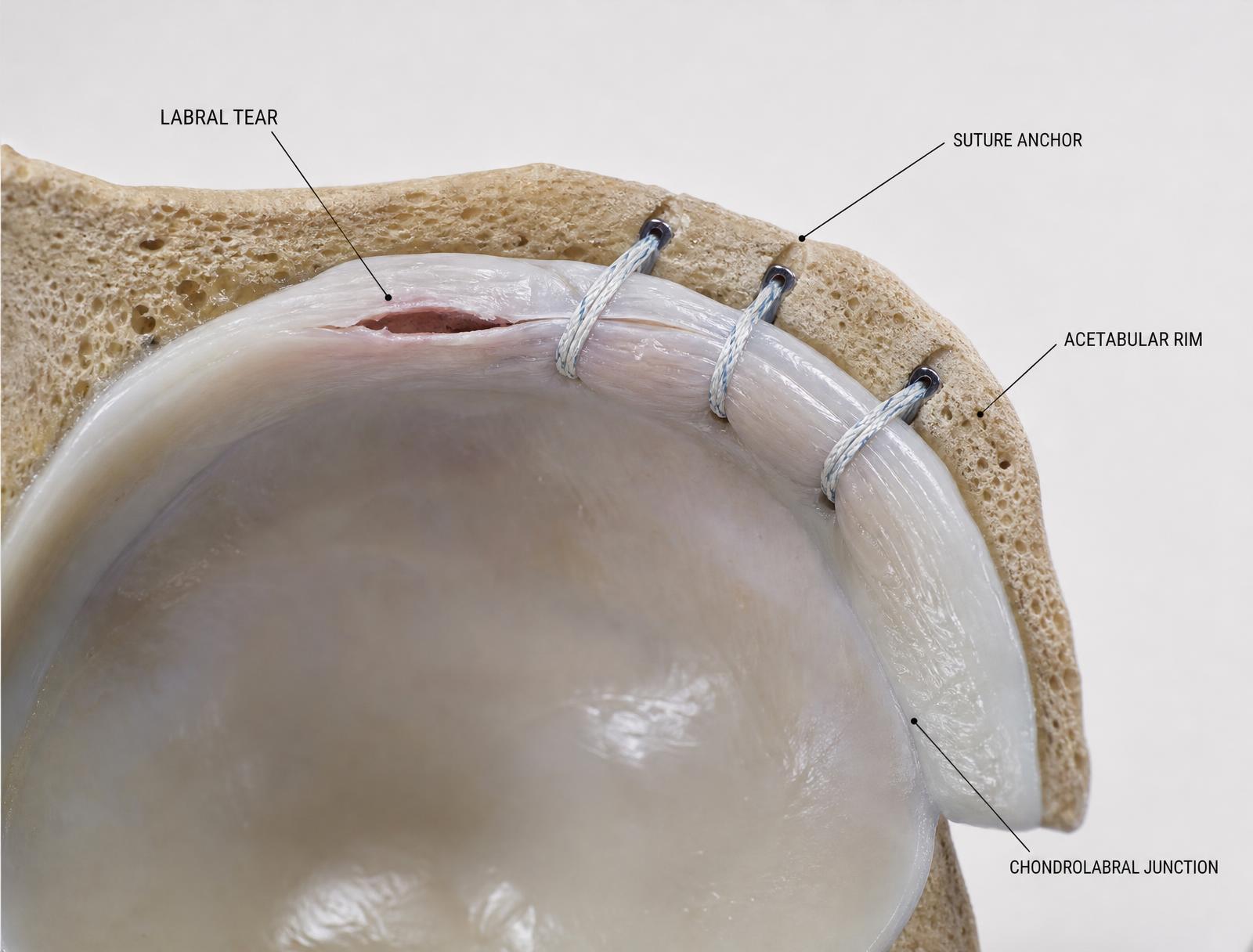
The labrum is the cartilage ring that deepens the hip socket, seals the joint and contributes to stability. A tear often causes deep groin pain, clicking or a loss of rotational comfort — and it rarely happens in isolation.
Tears are usually a symptom, not the whole story
Most labral tears occur because of underlying impingement or instability. Repairing the labrum without addressing the cause is one of the most common reasons hip arthroscopy fails. A complete evaluation looks at bone shape, socket coverage, version and soft-tissue laxity.
Repair, reconstruction or debridement
- Repair: the preferred option when tissue quality is good — the labrum is re-secured with anchors to restore the suction seal.
- Reconstruction: used when the labrum is deficient, calcified or previously resected, rebuilding it with graft tissue.
- Debridement: reserved for small, degenerate flaps where repair is not feasible.
Non-surgical care still matters
A torn labrum does not heal on its own, but not every tear needs surgery. Many patients improve with physical therapy, load management and injections. Surgery is considered when mechanical symptoms persist and imaging confirms a structural cause.
Book an evaluation
Dr. Mahmoud Almasri, MD, FRCSC treats athletic hip injuries at Cincinnati SportsMedicine and Orthopedics, serving Cincinnati and Northern Kentucky.
Medical disclaimer: this article is for educational purposes only and does not replace personalized medical advice. If you have hip pain or an injury, consult a qualified orthopedic specialist for evaluation and treatment.