September 23, 2026
Hip Impingement (FAI) in Athletes: What It Is and How It's Treated
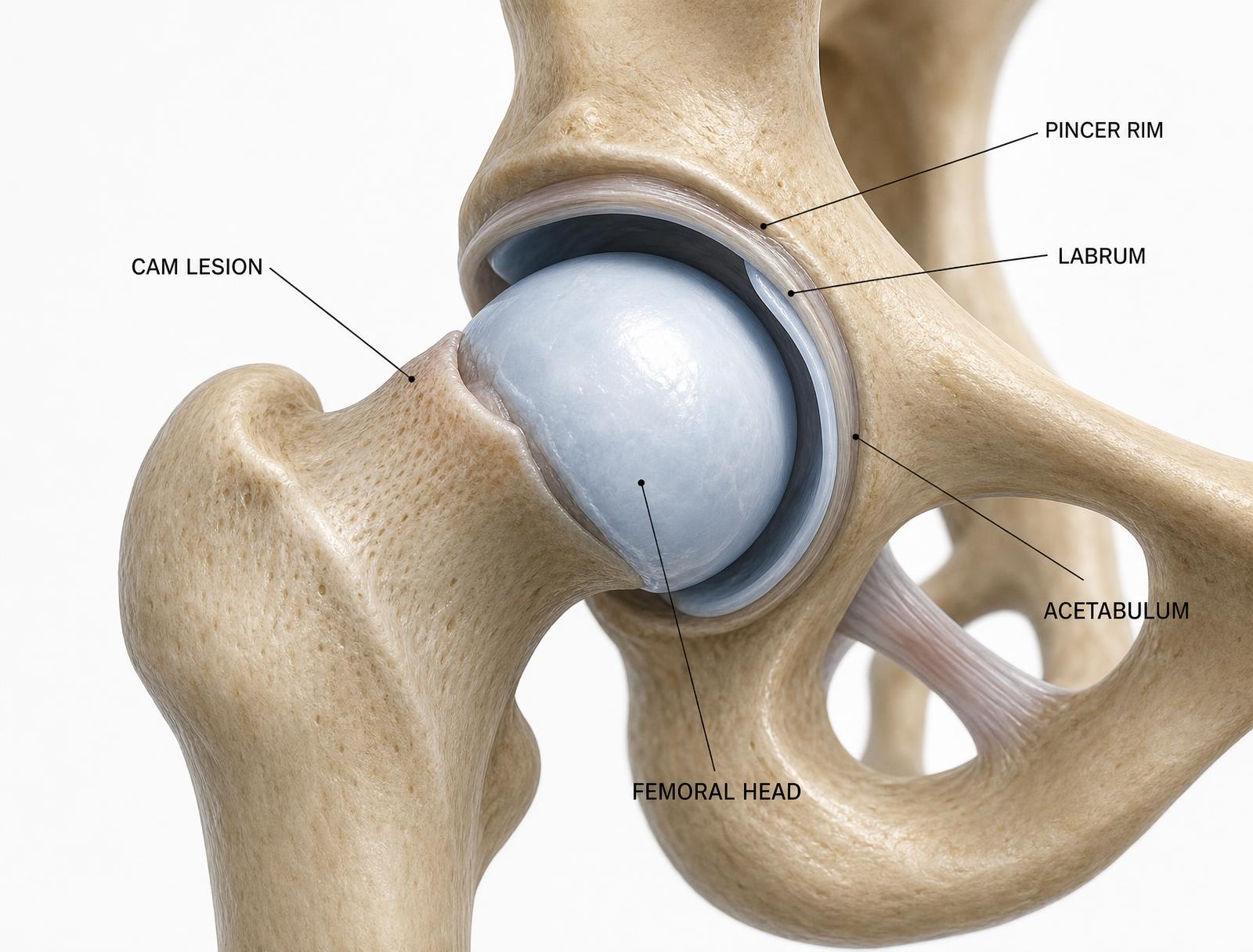
Femoroacetabular impingement, or FAI, is the most common structural reason young athletes develop deep groin pain. It happens when extra bone on the femoral head-neck junction (cam), the socket rim (pincer), or both, causes abnormal contact during hip motion.
What athletes notice
- Deep groin pain with squatting, cutting or hip flexion
- Stiffness or a catching sensation
- Pain that worsens with sport and eases with rest
- Difficulty sitting for long periods or getting in and out of a car
Why it matters
Repeated contact between bone and labrum gradually damages the labrum and the cartilage behind it. Treating the mechanics early protects the joint surface, which is the part of the hip that cannot be replaced without a replacement.
How it is treated
Many athletes improve with activity modification, targeted physical therapy focused on the deep hip rotators and core, and selective injections that also help confirm the diagnosis. When structural damage is present and symptoms persist, hip arthroscopy can reshape the bone, repair the labrum and restore normal clearance.
Recovery is criteria-based: crutches for two to four weeks, running around three to four months, and full return to cutting or contact sport typically between four and six months.
Book an evaluation
Dr. Mahmoud Almasri, MD, FRCSC treats athletic hip injuries at Cincinnati SportsMedicine and Orthopedics, serving Cincinnati and Northern Kentucky.
Medical disclaimer: this article is for educational purposes only and does not replace personalized medical advice. If you have hip pain or an injury, consult a qualified orthopedic specialist for evaluation and treatment.